
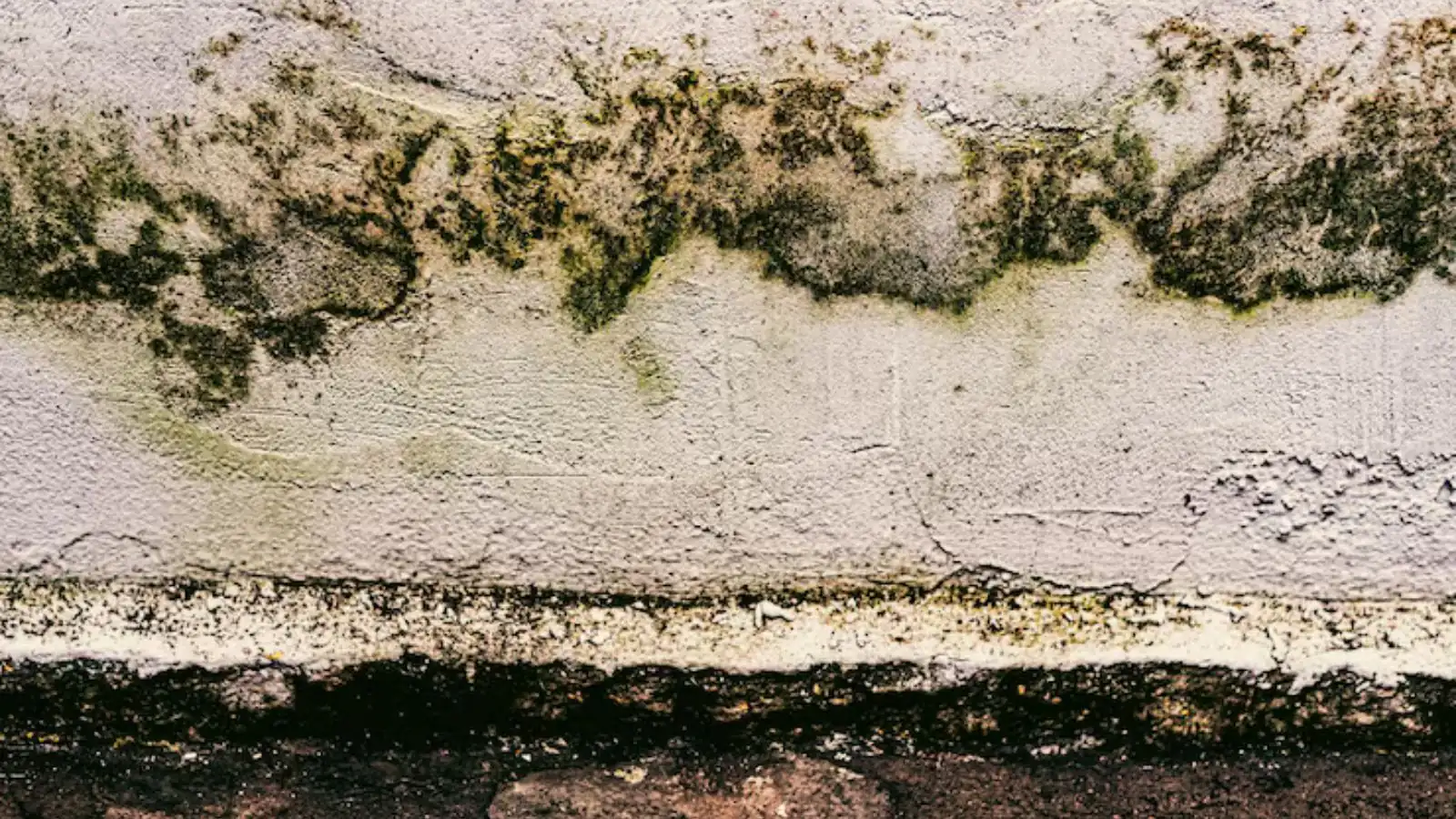
Visual cues: texture first, color second
Color is the least reliable clue. Mold can be black, green, white, gray, brown or even orange or pink, and the same species can change color as it ages. Texture and pattern tell you more.
Fuzzy or cottony
Raised, soft patches that look like tufts of fiber, often white or gray on wood or fabric.
Speckled or dotted
Clusters of small dark dots that spread outward, common on bathroom ceilings and painted drywall.
Slimy or wet-looking
A glossy film on surfaces that stay damp, such as grout, pipes or the back of a cabinet.
A stain that returns
A patch you clean and repaint that comes back through the paint in the same spot. That points to moisture behind the surface.
Growth often follows moisture in a pattern: it clusters around corners, along a line where water wicked up a wall, or in a ring under a leak. A random, evenly spread film across a whole wall is more likely dust or soot.
Smell and surface clues
A musty, earthy odor in a closet or basement is often the first sign. The smell can come from damp materials even before anything is visible, which is why a smell with no stain deserves a closer look at what is behind it.
- Paint that bubbles, peels or blisters on an outside wall
- Wallpaper seams that lift or discolor
- Warped or soft baseboards
- Drywall that feels cool or damp when you press it
- Ceiling stains with darker rings at the edges
These signs point to moisture whether or not mold is present. Fixing the water problem is the first step in either case, and our water damage repair crew handles the rebuild once the cause is fixed.
Where mold hides in Utah homes
Mold needs moisture and a surface that holds it. These spots collect both more often than people expect.
Behind a washing machine
A slow drip from a supply valve or a stuck drain hose can wet the wall and baseboard for weeks. Slide the machine out and check the drywall behind it, the floor under it and the valve fittings.
Under a bathroom sink
The cabinet floor and the back panel stay damp when a trap or supply line weeps. Look for swollen particleboard and dark staining around the pipe penetrations.
Window wells and basement corners
A window well that overflowed and sat full can wet the framing and drywall around the window. Corners of the basement where two outside walls meet stay cool and collect condensation.
Closet walls on outside walls
A closet against an exterior wall has little airflow. Boxes stacked tight against the wall hold moisture, so pull them out and look at the lower few feet.
Near condensate lines
A clogged HVAC condensate line can back up and drip into the ceiling or drywall near the furnace or air handler. Check the drain pan and the ceiling below any attic unit.
Things that look like mold but are not
Before you panic, rule out the usual look-alikes. Several of these are common on basement walls.
| Looks like mold | Could be | How to tell, generally |
|---|---|---|
| White, powdery crust on concrete or block | Efflorescence, mineral salts left by water moving through masonry | Often brushes off dry, feels gritty and has no odor |
| Dark streaks on walls | Dirt, soot or dust patterns | Often follows airflow, vents or outlets |
| Dark smudges on ceiling corners | Dust and ghosting on cold spots | Wipe a small hidden spot with a damp cloth and see if it lifts |
| Brown rings | Old water stains | Often dry to the touch with a clear edge and no fuzzy texture |
| Black staining on wood | Iron or tannin stains | Often stays the same after wiping |
A general approach: choose a small, hidden spot, wipe with a damp cloth and see what happens. Dirt and soot may lift, and efflorescence can brush away. Do not scrub or disturb a large area, and stop if you are unsure.
This is a rough sorting method, not a test. Many surfaces look the same to the eye and a damp-cloth test cannot identify what you have.
The honest limit: only testing identifies mold
No photo guide, including this one, can tell you for certain that a spot is mold. Only sampling and lab analysis can confirm it and tell you what kind. Even a clean-looking wall can have growth in the cavity behind it.
The EPA says to hire a professional for suspected hidden mold. S520 is the published ANSI/IICRC standard for mold remediation and covers testing and removal, and you can ask any company whether its crews follow it. Questions about health belong with a physician, not with a restoration company.
Describe what you found
Call (385) 988-9410 and tell us where it is and what is wet nearby. Same-day response when available.
If the spot appeared after a flood or a large leak, see our flood damage restoration page for what that involves. Homeowners in Herriman and Alpine ask us the same questions.
Draper: window wells, irrigation and spring melt
Secondary water in Draper comes from WaterPro and Draper Irrigation Co., not the city, and it typically runs from about April 15 to about October 15. Over those months, sprinkler overspray and watering aimed at the foundation can send water into window wells all summer, so look in those wells and at the framing around them for dark growth once the system shuts off in the fall.
Salt Lake City's NOAA normals show about 52 inches of snow a year and April as the wettest month (airport station, not Draper). Snow piled against a window well and then melting can fill the well, and wet drywall at the basement window is where growth often shows first.
The EPA's drying window is 24 to 48 hours, so a well that overflowed after a storm needs attention the same day it is found. On August 3, 2023, Draper's mayor reported a little over 2 inches of rain in over an hour, and homes were flooded with mud and debris, so an overflowed well after a storm like that is worth a close look.
Sources: Draper City water and storm water, EPA: Brief guide to mold, moisture and your home, Deseret News: state of emergency after Utah thunderstorm
Common questions
Does the color tell me what kind of mold it is?
No. Color alone cannot identify mold, and a single species can look different as it ages. We do not diagnose or make health claims, and health questions belong with a physician. What we can say is that any growth means there is moisture to find and fix.
Can I tell mold from dirt with a bleach test?
Some guides suggest dropping bleach on a spot to see if it lightens. That is a rough clue at best, and it does not confirm what the spot is. Never mix bleach with other cleaners, and use testing for a real answer.
What if I smell mold but cannot see it?
A musty smell can mean moisture inside a wall, under flooring or in a cavity. The EPA advises hiring a professional for suspected hidden mold. Do not cut into walls yourself.
Why do Draper window wells matter for mold?
Wells collect snowmelt, storm runoff and sprinkler overspray, and wet window framing and drywall can follow. Check the area around basement windows after spring melt and after irrigation season ends in the fall.