
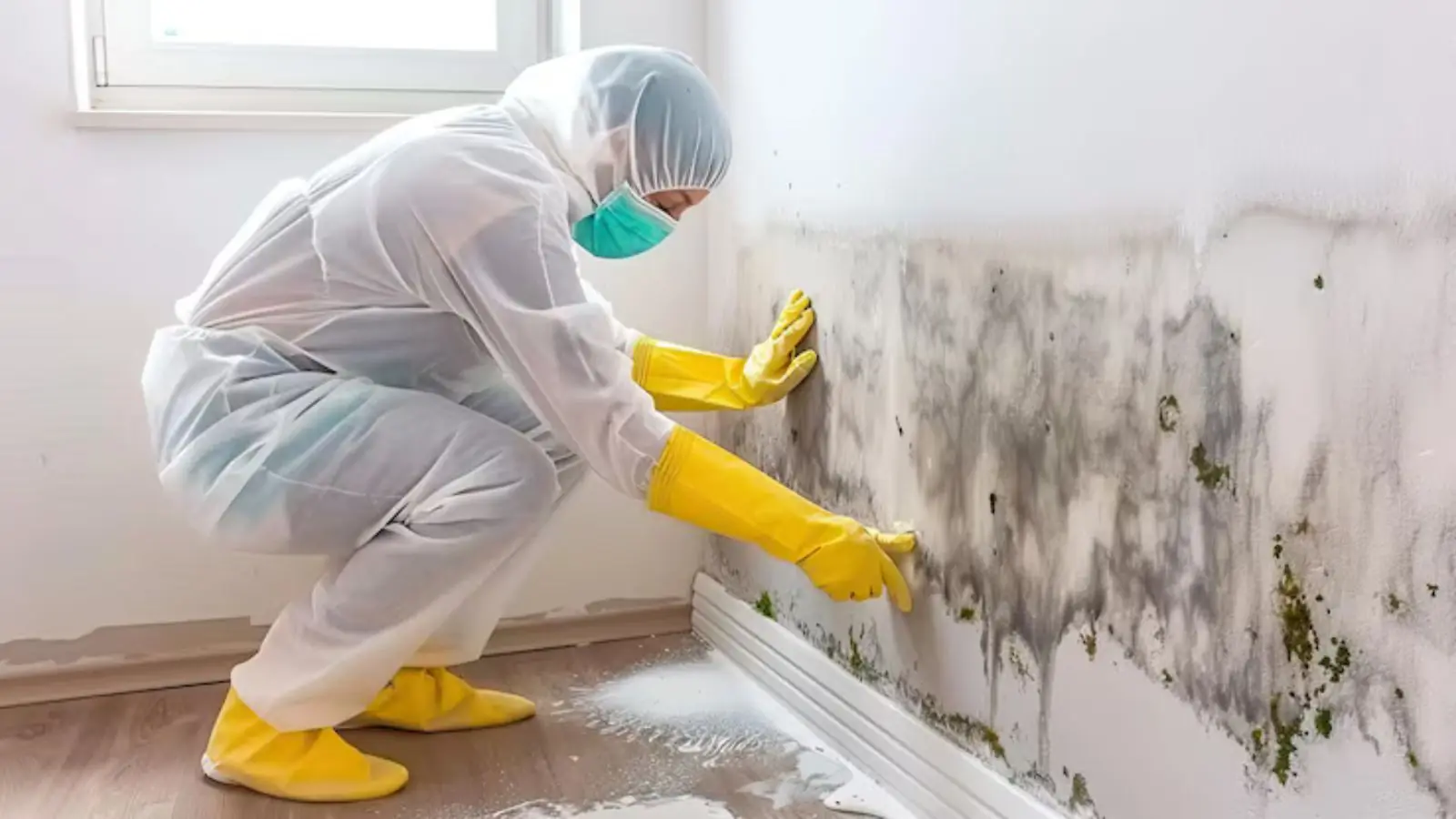
A leak, a closet and a smell
Most mold calls start the same way. Someone noticed a wet spot in a closet, a smell under the basement stairs, dark spots at the corner of a shower ceiling, or carpet that looked wrong when pulled back. Mold remediation in Draper, UT is the process of containing and removing mold after moisture, and the S520 standard is the published reference for how that work is done.
Mold work is secondary to the water side of our business because mold follows water. If a leak is still active, the first call is for water mitigation, and mold work comes after the water is controlled.
Mold after water damage
The EPA says the key to mold control is moisture control, and that wet materials should be dried within 24 to 48 hours to prevent mold growth. After that window, growth becomes likely on porous materials such as drywall paper, ceiling tile and carpet. Cleaning mold without fixing the moisture problem means it will most likely return.
The usual sources are ordinary: a toilet leak upstairs, an air conditioner condensate line, a roof leak, a washer valve, a window well that overflowed. A basement that was flooded in a storm and not dried quickly is another. Find the source before anything else, since a mold crew cannot succeed over a wet wall.
Mold testing and inspection
Inspection starts with moisture. Meters and thermal imaging map where moisture is, and a visual check covers the places mold hides: the back of a closet wall, the underside of a subfloor, behind baseboard, the top of a basement stair. Odors often point to hidden growth even when nothing is visible.
Sampling is a separate decision. Testing can confirm what a surface contains and, after remediation, clearance testing by an independent party can confirm the area is clean. If a home sale or loan is waiting on a mold finding, ask the lender or buyer what documentation they will accept before work begins. We do not promise that any lender will accept a particular report.
Health questions belong to your physician. We can tell you what we find in the building, and we will not diagnose anyone or make health claims.
Mold removal and black mold cleanup
Color does not tell you what kind of mold it is. People search for black mold because it sounds serious, but dark growth can be many things, and only testing identifies it. Remediation follows the same logic either way: contain, remove, clean, dry, verify.
Inspect
Moisture mapping and a visual survey set the boundary of the problem.
Contain
Plastic barriers and negative air keep spores from spreading while work is underway.
Remove
Affected porous materials are removed and bagged. Hard surfaces are cleaned with HEPA vacuums and damp wiping.
Verify
The area is dried, inspected and cleared before the rebuild starts.
EPA says absorbent or porous materials, such as ceiling tiles and carpet, may have to be thrown away if they become moldy. The same guidance says not to paint or caulk over moldy surfaces. A fresh coat over mold hides it, then lets it return.
DIY or professional
| Situation | Reasonable DIY | Call a professional |
|---|---|---|
| Small spot on a hard surface | Under about 10 square feet, cleaned with detergent and water and dried completely | Spot returns after cleaning |
| Mold on drywall or ceiling tile | Sometimes small spots | Drywall is soft, sagging or bubbled |
| Area larger than about 10 square feet | Not recommended | EPA points to its commercial building guide for larger areas |
| After sewage or contaminated water | No | Always |
| Suspected hidden mold | No | Odor or stains with no visible source |
| HVAC may be contaminated | Do not run it | Have the system and source checked |
The 10 square foot figure comes from EPA guidance, and it is a rough rule, not a promise.
What Draper homes face
Utah's dry climate gives a false sense of safety. Mold needs moisture, not humid weather, so a single failed supply line or a flooded window well gives growth what it needs even in a dry year. Basements are the usual place, along with closets on outside walls and areas around condensate lines.
Draper's water events show where trouble starts. Groundwater flooded more than thirty homes in the Bellevue neighborhood in January 2023, and storm flooding on August 3, 2023 sent mud and debris into homes. Either leaves wet materials that needed drying quickly. We cover that work on flood damage restoration.
What shapes the cost of mold work
Affected area
Square footage and number of rooms set the scope.
Materials
Drywall, insulation and carpet come out. Framing can often be cleaned in place.
Containment
Larger jobs need barriers, negative air and air scrubbers.
Water source
The leak or flood that caused it has to be fixed or the work repeats.
Testing
Sampling and clearance testing are separate from removal.
Rebuild
Anything removed has to be replaced and finished.
Check your policy and ask your insurer, since coverage for mold often depends on the cause of the water. Ask whether your state licenses mold work before you hire anyone. Want your real number? Call (385) 988-9410. We also serve nearby towns such as South Jordan.
Mold after a leak?
Call and describe where it is and where the water came from.
Common questions
Do you offer mold testing and clearance?
We inspect with moisture meters and can arrange sampling. Independent clearance testing by a third party is the cleanest way to confirm an area after work. Ask what documentation your lender or buyer accepts.
A lender will not fund a loan until mold is removed. What do I do?
Ask the lender what documentation they require before work starts, then call us with the scope. We cannot promise any lender will accept a specific report.
Can I just paint over mold?
No. EPA guidance says not to paint or caulk over moldy surfaces. Fix the moisture, remove the mold, and then finish the surface.
How do you know if it is mold or just a stain?
Only testing can say for sure. A musty odor, spots that return after cleaning, and a moisture source nearby all point toward mold.
Is mold removal covered by insurance?
It often depends on the cause of the water. Sudden and accidental damage is more likely to be covered than a long-running leak, and flood damage is usually excluded. Check your policy and ask your insurer.