
Water on the floor or in the walls?
Most people do not search for water mitigation. They search for a wet carpet that will not dry, a wall that feels damp, a ceiling stain that keeps spreading, or a musty smell in the basement. Those are all mitigation problems, and they get worse by the hour.
Mitigation is the trade word for the emergency stage of water damage: stop the source, remove standing water, and dry the building before materials fail and mold gets a foothold. It is one stage of the full process described on our water damage restoration homepage, and it is the stage with a clock on it.
Emergency first steps while you wait
Urgency is real here, and dispatch is open 24/7 for it. Your first minutes help more than anything we can do later.
Stop the source
Shut off the main water valve or the fixture valve. If you do not know where it is, find it before the next emergency.
Power with care
Turn off power to wet areas only if the panel is dry and safe to reach. If water touches outlets or the panel, call the utility or 911 before calling us.
Lift what you can
Move rugs, electronics, books and furniture legs out of the water. Put foil or plastic under furniture feet.
Keep people out
Keep children and pets away from standing water, especially anything that came from a drain or toilet.
Same-day response is available when a crew is available, and after-hours calls are normal for this work. We do not promise an arrival time. We do promise to tell you honestly what the next step is.
How mitigation works step by step
Locate
Moisture meters and thermal imaging find where water traveled, not only where it shows.
Extract
Pumps and extraction units remove standing water and pull it from carpet and pad.
Dry
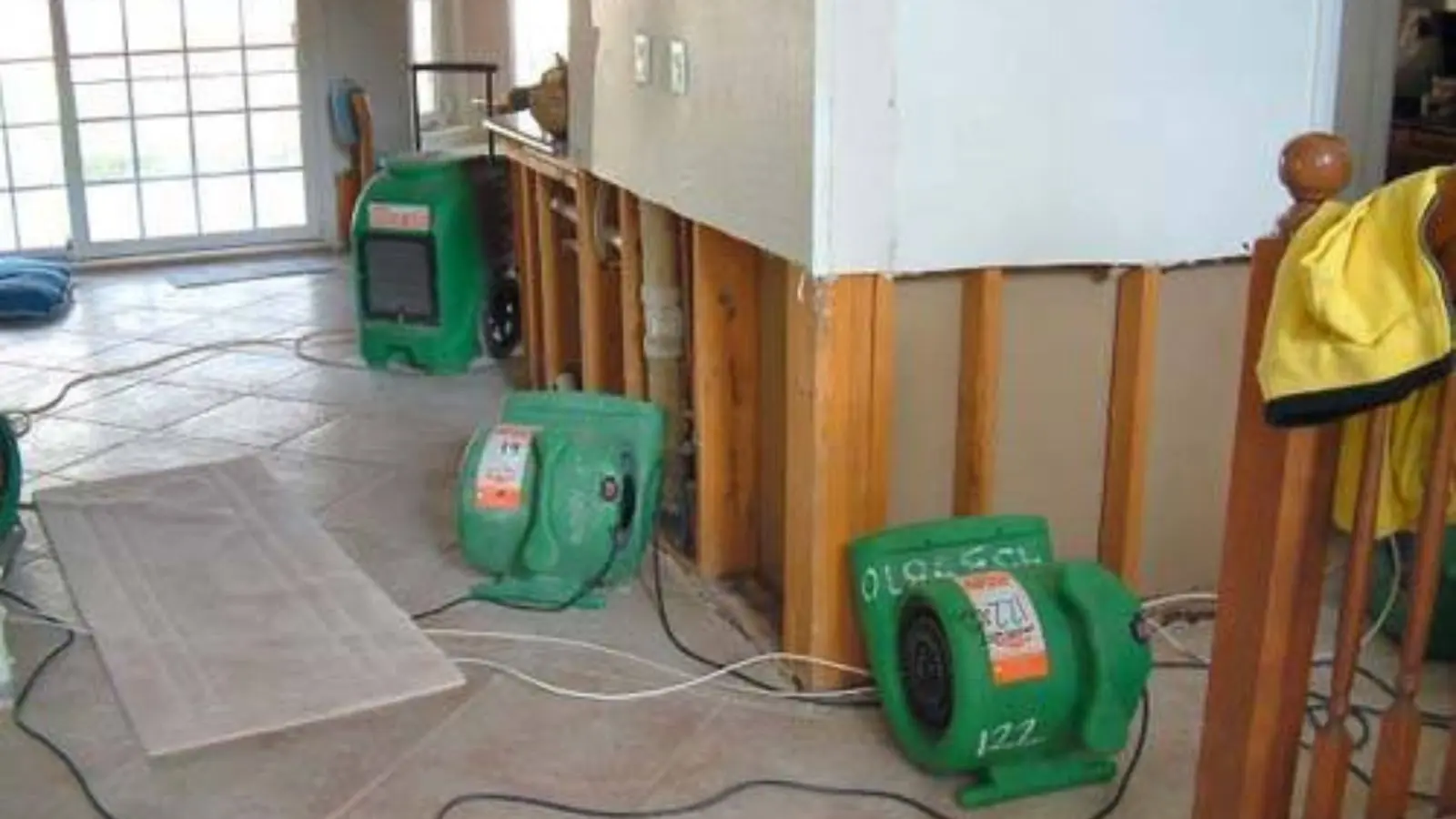
Air movers and LGR dehumidifiers dry the structure while meters track progress.
Verify
Readings are logged each visit so the structure is confirmed dry before anything is closed up.
The equipment is ordinary and effective. Air movers push air across wet surfaces, dehumidifiers pull moisture out of that air, and the readings tell us when to stop. Drying time varies with the material, the water category and the home, so ask for readings rather than a promise.
Structural drying
Structural drying is the part most homeowners never see. Wood framing, subfloor, drywall and concrete hold water far longer than the surface does, and a floor can feel dry while the cavity below it is still wet. Drying equipment is placed by moisture map, not by room count.
In practice that means holes drilled or flooring edges lifted so air can move into cavities, wet baseboard removed, and wall bays opened where readings stay high. The goal is to keep as much of the building as possible. Materials that cannot be dried, such as soaked insulation or pad, are removed early so they stop feeding moisture back into the room.
Utah's dry air helps outdoors but not inside a sealed, wet house. Controlled equipment still does the work, and the house is usually closed up during drying.
Why speed matters before mold
The EPA advises drying water-damaged areas and items within 24 to 48 hours to prevent mold growth, and notes that mold is controlled by controlling moisture. That window is the reason mitigation starts with a phone call rather than a quote comparison.
If mold is already visible or the water sat for days, the job shifts to the mold remediation process, which adds containment and follows the ANSI/IICRC S520 standard.
Mitigation for Draper conditions
Draper homes meet water from several directions. Pressurized irrigation is not a city service here: WaterPro and Draper Irrigation Co. supply it, and it typically runs from about mid-April to mid-October, so a leak from a buried line or a spring startup can wet a crawl space or window well. Culinary water comes from Draper City Water, which buys its supply from Jordan Valley Water Conservancy District.
Storm events add their own problems. After the August 3, 2023 monsoon storm, Draper's mayor declared a state of emergency and homes were reported filled with mud and debris. For storm and groundwater loss, see flood damage restoration, and for the cleaning stage that follows, water damage cleanup.
What shapes the cost of mitigation
Water category
Clean, gray and black water are handled differently and priced differently.
Affected area
Square footage and the number of rooms and floor levels drive equipment count.
Materials involved
Carpet, hardwood, concrete and drywall each dry differently.
Drying days
More equipment days and more monitoring visits add cost.
Access
Finished basements, vaults and tight crawl spaces take more time to open and dry.
Rebuild afterward
What must be removed shapes the repair scope that follows.
Insurance often responds to sudden and accidental losses and often does not respond to long-running leaks, and flood needs its own policy. Check your policy and ask your insurer. Want your real number? Call (385) 988-9410.
Start drying today
Dispatch is open 24/7. Tell us what happened and where.
Safety checklist while you wait
Before anyone arrives, a few safe steps protect people and limit damage.
- Shut off the main water valve if the source is a supply line.
- Turn off power to wet areas only if the panel is dry and safe to reach.
- Keep children and pets out of wet rooms.
- Move small valuables to a dry spot, and leave heavy furniture alone.
- Photograph the damage before anything is moved.
Common questions
Do you handle water mitigation emergencies at night or on weekends in Draper?
Yes. Dispatch answers 24/7 and after-hours calls are routine for this work. Same-day response is available when a crew is available, and we do not promise a specific arrival time.
How long does structural drying take?
It varies with the materials, the water category and how long the water sat. Ask for moisture readings at each visit, because the readings, not a calendar, show when the structure is dry.
Can I rent air movers and dehumidifiers myself?
Rental units exist, but placement and monitoring decide whether drying works. We do not offer an equipment rental service. If you try it yourself, keep a moisture meter on hand and watch wall cavities, not just floors.
What is the difference between mitigation and cleanup?
Mitigation stops the damage and dries the structure. Cleanup removes debris and contaminated materials and sanitizes. The two overlap, and our water damage cleanup page covers the second stage.
Is basement waterproofing part of mitigation?
No. Restoration repairs damage after water gets in. Waterproofing changes the building so water stays out, and that is a different trade.