
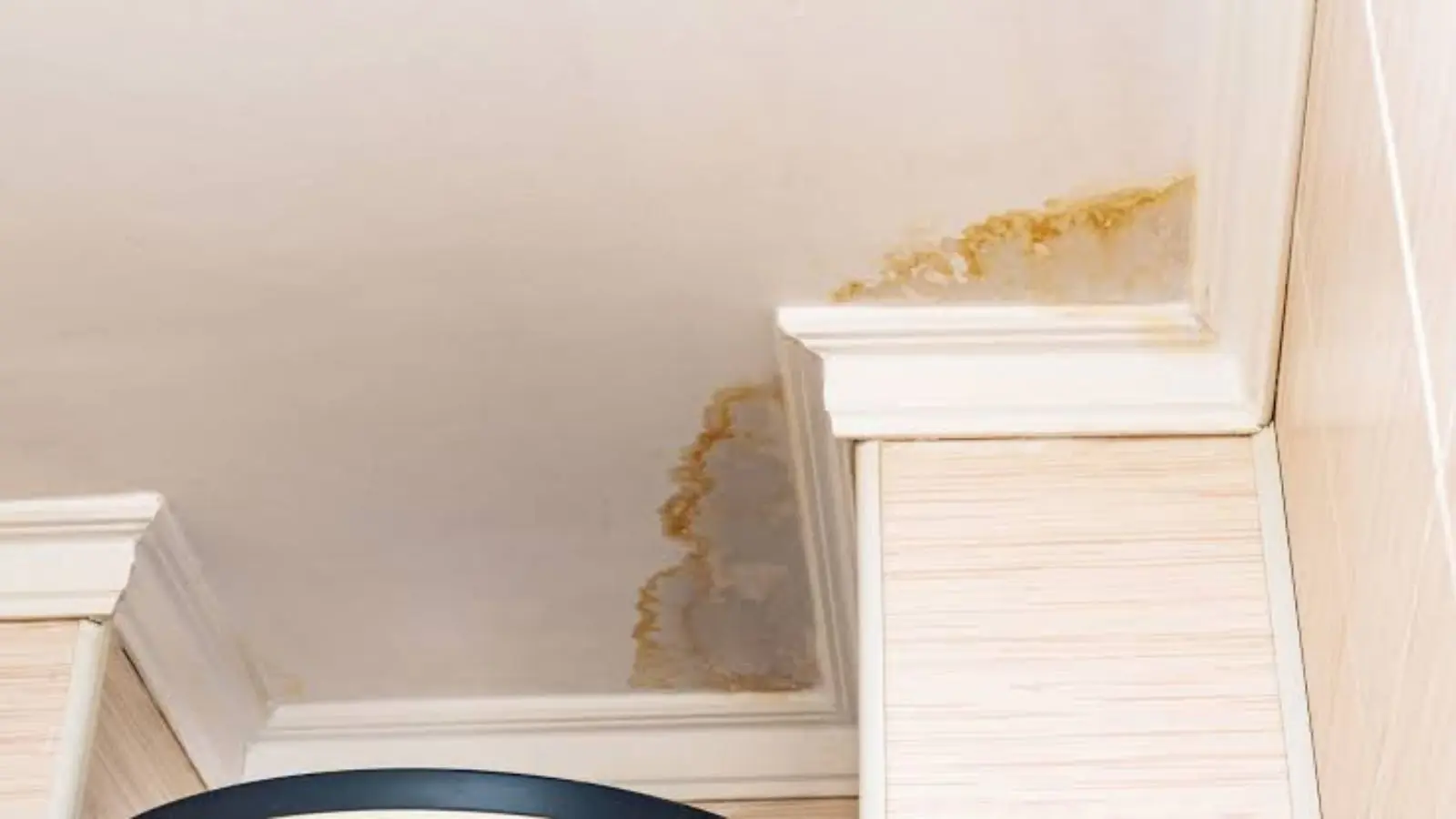
Two ceilings that look alike and are not
A ceiling with a faint tan ring, hard drywall, and no history of recent water is a cosmetic problem. A ceiling with the same ring but a slight sag and a damp feel is a structural and moisture problem. The stain is the same, and the right response is opposite.
What separates them is moisture, size, and what is above and beside the wet area. If you are still working out where the water came from, start with a diagnosis, and come back here once the source is fixed. Only after that does the DIY-or-pro question make sense.
The decision table
Find the row closest to your ceiling. If two rows fit, use the more cautious one.
| Your ceiling | DIY? | Why |
|---|---|---|
| Dry, hard drywall, faint stain smaller than a dinner plate, source fixed weeks ago | Yes | Nothing is wet, so primer and paint can seal it |
| Dry stain larger than a bath towel, source fixed | Maybe | Primer works, but a large stain often hides sagging or a failed tape seam |
| Wet, soft, or sagging drywall | No | Wet drywall must be removed and dried, not painted |
| Ceiling stayed damp for more than 48 hours | No | Mold growth becomes likely, per EPA drying guidance |
| Suspected mold covering about 10 square feet or more | No | EPA says larger areas call for professional guidance |
| Wet insulation above the ceiling | No | Insulation holds water against drywall and has to be replaced |
| Light fixtures, fans, or wiring in the wet area | No | Water plus electricity is not a DIY risk |
| Water from a toilet, drain, or sewer line | No | Contaminated water needs professional handling |
The 10 square foot line comes from the EPA's mold cleanup guidance. Under it, a household can often handle small areas. Over it, or when water damage is significant, the agency points to its remediation guidance for larger buildings.
How to fix a small dry stain yourself
This is for a dry stain on solid drywall, where the leak has been repaired and nothing has changed for at least a week. Gather a stain-blocking primer, a ceiling paint that matches your sheen, a roller with an extension pole, a putty knife, painter's tape, and a drop cloth.
- Press the stain with a flat hand. If it is cool, soft, or springs back, stop and treat it as wet.
- Cover the floor and furniture, and open a window if you will use an oil-based or shellac primer.
- Scrape off any loose or flaking paint with the putty knife and wipe the area with a barely damp cloth.
- Let the surface dry fully, then apply stain-blocking primer over the stain and about a hand's width beyond its edge.
- Let the primer dry per the can, then apply a second primer coat if the stain still shows through.
- Paint the entire ceiling plane in one go, working from the wall into the middle, so there is no visible touch-up square.
- Check the spot after the next shower, rain, or a week of normal use. A returning stain means the water is still coming from somewhere.
If the stain shows through after two primer coats
Stop adding paint. A stain that keeps bleeding through usually means moisture is still present behind the surface. Treat it as a wet ceiling and have the area measured.
When not to DIY, and what to do instead
Suspected mold
Dark or fuzzy growth over about 10 square feet, or any growth you cannot explain. Do not paint or caulk over it. Testing and removal belong to mold remediation.
Wet insulation
Insulation that has soaked up water has to be removed and replaced. It cannot be dried in place with a hair dryer or fan from below.
Electrical in the wet area
Recessed cans, a bath fan, or a ceiling fan box with water around it. Leave the breaker off and call a licensed electrician before anyone cuts drywall.
Sewage or contaminated water
Anything that came from a toilet, drain, or backup is not a paint-and-patch job. Stay out and see water damage cleanup.
Mistakes that turn a small stain into a bigger job
- Painting over a ceiling that has not been tested for moisture
- Using a regular ceiling paint where a stain-blocking primer was needed
- Pushing a sagging ceiling back up instead of letting it drain and be assessed
- Cutting a hole into a wet ceiling under a light fixture
- Ignoring a stain that returns after rain or showers
- Replacing only the damaged paint when the drywall behind it is soft
Most of these are avoidable by testing dryness first. If you do not own a moisture meter, a pro can do a reading without starting a larger job.
Want a second opinion on your ceiling?
Call (385) 988-9410. We will tell you if it is a primer job or a repair job, and explain the scope before any work starts.
What a pro repair adds
A hired water damage repair job adds the parts that are hard to see from a ladder: moisture readings, a look above the drywall, cuts that follow the joists, taped and textured seams, and a primed, painted plane. It is also faster for large areas. A good rule is to hire out anything bigger than a single sheet of drywall.
If you live in Alpine or Sandy and are weighing this decision, the same table applies. The question is always moisture, size, and what is above.
Standard to ask about
The published ANSI/IICRC S500 standard for water damage restoration is the reference many professionals work from, and you can ask any company whether its crews follow it. For a ceiling, that means confirming the source is fixed and the framing above is dry before anyone patches or paints.
Draper note: shutoffs and drying windows
Draper City Water serves residential customers and contracts with Jordan Valley Water Conservancy District for supply. If a leak is running and you cannot find the fixture shutoff, locate your home's main shutoff before anything else, and use the city's water and storm water utilities page to find how to reach the water department about the meter.
The clock matters more than the brand of paint. EPA wants wet building materials dried inside roughly two days to head off mold, so if the ceiling has been damp since a leak earlier in the week, a DIY paint job is already off the table and the ceiling needs measuring.
Sources: Draper City: water and storm water, EPA: brief guide to mold, moisture and your home, EPA: mold cleanup in your home
Common questions
Can I paint over a water stain on the ceiling?
Only a dry, stable stain, and only after a stain-blocking primer goes on first. Regular paint lets the stain bleed back through. If the ceiling is soft or damp, painting hides a problem that will get worse.
How do I know the ceiling is dry enough to repair?
A moisture meter is the reliable way. Without one, the ceiling should feel the same as a dry area, show no new rings after rain or showers, and have had no new leak in at least a week. Anything doubtful is worth a reading before paint.
What primer should I use on a ceiling water stain?
Look for a primer labeled as stain-blocking, either shellac, oil-based, or a pigmented stain-blocking latex. Follow the label on ventilation and drying time. Two thin coats are more reliable than one thick one.
When does ceiling water damage need a professional?
When the drywall is wet or sagging, insulation above is wet, mold is suspected over about 10 square feet, electrical fixtures are in the wet area, or the water was contaminated. Those situations involve drying, containment, or safety work that painting does not cover.
I live in Draper and my water bill went up. Could that explain my ceiling?
It might. A hidden supply leak can cause both. Shut off all water use, then check whether your water meter dial still moves. If it does, there is a leak somewhere, and a ceiling stain with no fixture above it is a good place to look.