
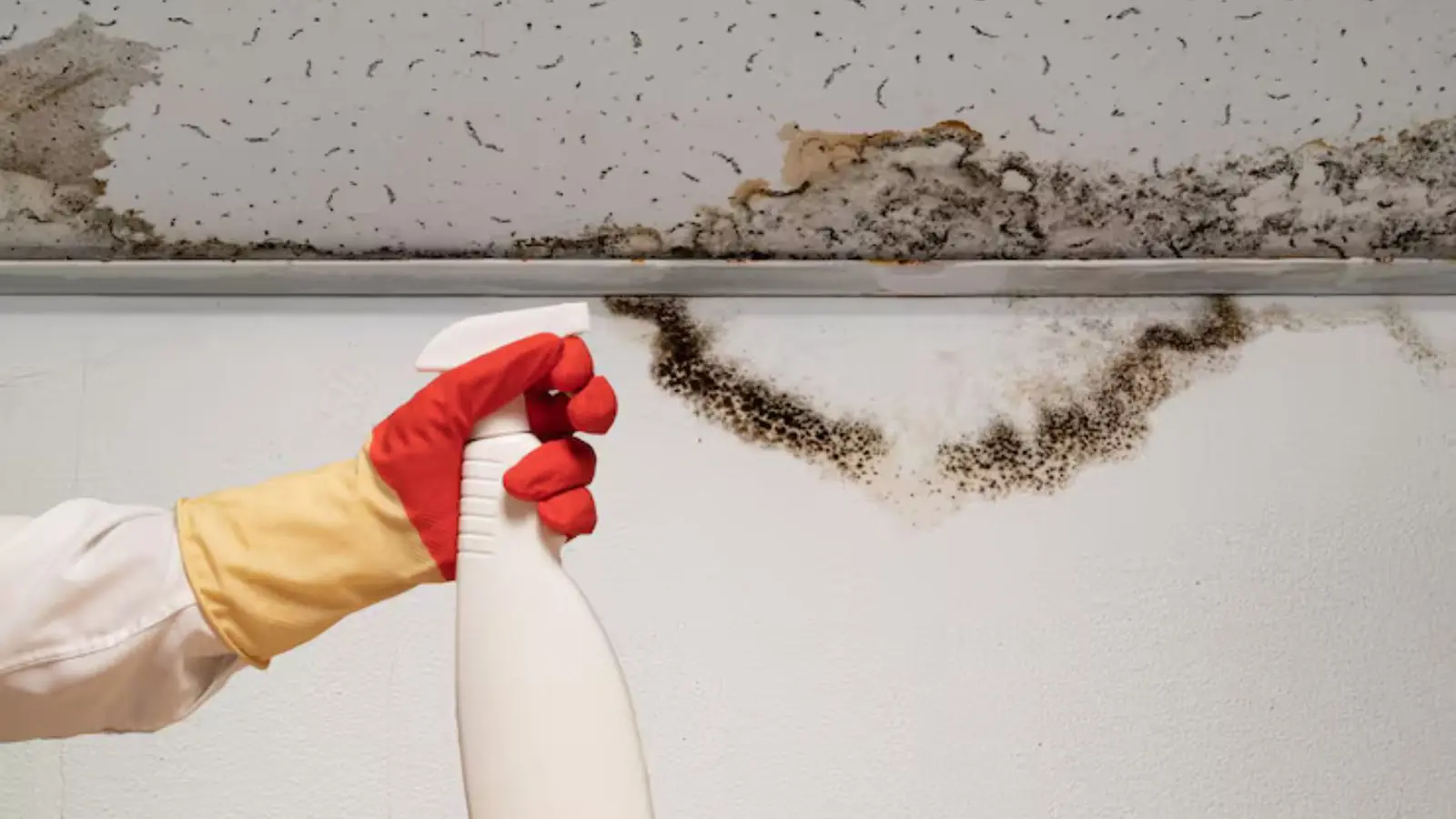
What mold on a ceiling is telling you
Mold needs moisture to grow. If it is on your ceiling, water has been there, either from an active leak or from one that dried but left the material damp long enough. The mold is a symptom, and the water is the cause.
Look at the pattern. A ring or a spot under a bathroom suggests a leak from above. A line along a wall edge suggests a roof or insulation problem in the attic. Scattered spots over a large area in a bathroom often point to humidity, a weak exhaust fan, or condensation rather than a pipe.
Why the source matters more than the stain
The EPA puts it plainly: the key to mold control is moisture control. If you clean mold without fixing the water problem, it will most likely return.
Three questions help you find the cause before anyone touches the surface:
- Is there a plumbing fixture, roof penetration, or air handler directly above the spot?
- Does the area get worse after a shower, a storm, or a stretch of cold weather?
- Is the insulation above wet, flattened, or stained?
If the answer to any of these is yes, scrubbing the ceiling is wasted effort. A wet attic or a leaking drain needs the water source repaired, the damp materials dried under water mitigation, and only then should the mold be addressed.
The 10 square foot line
EPA uses about 10 square feet as a rough threshold, roughly a patch three feet by three feet. Here is how it divides:
Under about 10 square feet
EPA says small areas can usually be handled by the household. That still means fixing the moisture first, wearing protection, and removing porous materials such as damaged ceiling tiles if they have become moldy.
Over about 10 square feet or significant water damage
EPA points to professional-level guidance. That means containment, controlled removal, and drying, rather than a bucket and sponge.
When you are unsure of the size, assume it is bigger than it looks. Ceiling mold can be wider on the attic side of the drywall than on the room side.
What not to do
Four things that make ceiling mold worse
Do not paint or caulk over it, since the EPA says not to cover moldy surfaces. Do not scrub it dry or knock it with a broom, which can spread material around the room. Do not run the HVAC system if you think the air handler or ducts are contaminated. Do not just clean it and move on if the source is still wet.
Also avoid cutting into a ceiling you suspect is wet or moldy without a plan for the insulation and dust. A tear-out without containment can send debris through the house and into ducts.
Is ceiling mold dangerous to my health?
A restoration company cannot answer that, and no website can answer it for you. Whether mold affects you or someone in your home is a medical question. If anyone has symptoms or health concerns, talk to a physician or other health professional.
What a restoration company can tell you is whether there is active moisture, how far growth extends, and whether materials have to come out. That is a building question, and it has clear steps.
When to call a restoration company
Call when any of these are true: the growth is larger than about 10 square feet, the ceiling or insulation is wet, you suspect hidden mold, the water was sewage or other contaminated water, or you have had repeated stains in the same place.
A job done to the ANSI/IICRC S520 standard for mold remediation usually runs in this order:
Assess and test
Moisture meters and thermal imaging find the wet area. Sampling may be done when it helps define the scope.
Contain
Plastic barriers and negative air containment keep dust and spores from drifting into other rooms.
Remove and clean
Affected drywall and insulation are removed and bagged. Framing is cleaned with HEPA vacuums and air scrubbers run during the work.
Dry and repair
The area is dried and verified before drywall, texture, and paint are replaced. See water damage repair for the rebuild step.
Nobody can promise that mold will never return. What a good job does is remove the growth and fix the conditions that fed it. Homeowners in Riverton and Alpine can call us to talk through what they are seeing.
See something dark on your ceiling?
Call (385) 988-9410. Scope and price are explained before work starts, and same-day response is available when we can.
Draper note: snowmelt, attics, and the 24 to 48 hour window
The Salt Lake City airport station averages about 52 inches of snow a year, and April is the wettest month. That is the Salt Lake City station, not Draper, but it describes the valley. Snow that melts onto a leaking roof edge or a thin patch of insulation can wet an attic for days, so check ceiling spots after thaws and spring storms.
EPA's drying window is one to two days, counted from when the material got wet. That is why a ceiling that got wet and then "seemed fine" deserves a moisture reading, not a visual check. Draper's online permit portal lists a Remodel/Alteration permit type if repairs will open the ceiling, and the city page does not say when one is required, so ask Draper City Hall.
Sources: EPA: brief guide to mold, moisture and your home, EPA: mold cleanup in your home, Draper City: applications, licenses and permits
Common questions
Can I clean ceiling mold myself?
EPA says small areas under about 10 square feet can usually be handled by the household once the moisture problem is fixed. Larger areas, wet insulation, or contaminated water call for a professional. If anyone has health concerns, ask a physician.
Should I paint over mold on the ceiling?
No. The EPA says not to paint or caulk over moldy surfaces. Painting hides it and leaves the moisture and the growth in place.
Is it safe to run the furnace or air conditioner with ceiling mold?
If the air handler or ducts are contaminated, running the system can spread material through the home. If you are unsure, turn it off and have the system and the source checked before using it.
How do I know if the mold is from a roof leak or a bathroom problem?
Check what is directly above it. A fixture, drain, or vent pipe points to plumbing, while an exterior wall, valley, or chimney points to the roof. Spots that appear after storms or thaws suggest the roof, and spots near a bath fan suggest humidity.
Does mold from a melting-snow roof leak in Draper behave differently?
The mold needs the same thing, which is moisture, but the leak may come and go with weather, so the stain can return in spring. Look in the attic after a thaw for damp insulation and fix the entry point before any cleanup.