
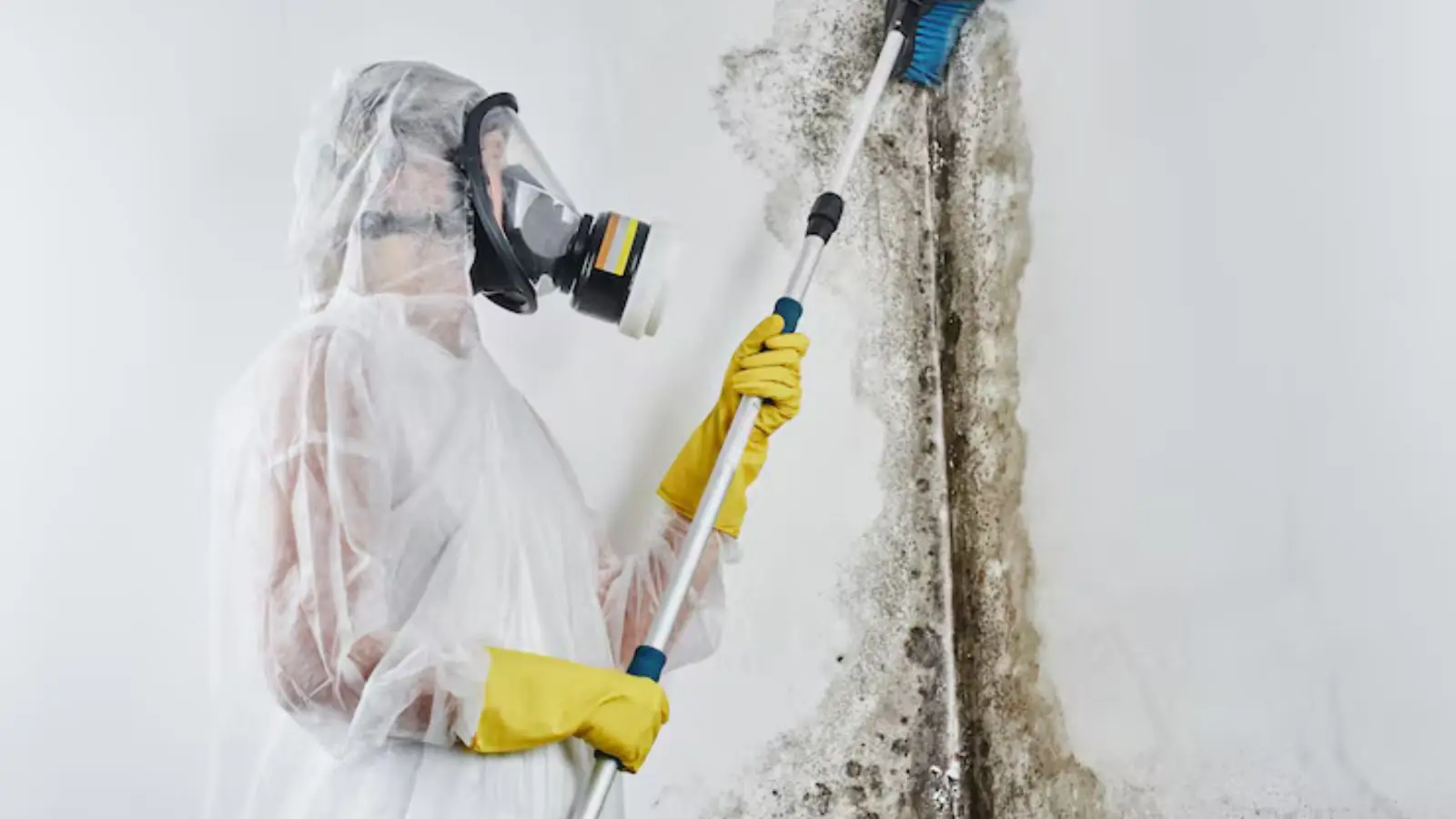
What "black mold" means as a search term
In everyday use, black mold is a catch-all for dark green, gray or black growth. The color does not identify a species, and different molds can look alike. Only testing by a qualified lab, ordered for a good reason, can name what a sample is.
That is not a trick to avoid the question. It changes the plan in a practical way. Whether the growth is a common household mold or something less familiar, the removal approach is the same: stop the water, contain the area, remove the affected material, and dry. This page therefore avoids guessing and focuses on method.
If you have health questions about being around mold, a physician is the right person to ask. A restoration company can discuss the building, not your body.
Removal starts with the water, not the growth
The EPA says the key to mold control is moisture control. Cleaning mold without fixing the water problem means it will most likely return, so a plan that begins with scrubbing is missing its first step.
- Find and repair the leak, seep or condensation source
- Remove wet porous materials that cannot be dried in time
- Dry the structure with air movers and dehumidifiers, and confirm with a moisture meter
- Remove or clean the affected materials under containment
- Verify the work and fix what let the moisture in
Think about a ceiling stain under a bathroom with a slow supply leak. Cutting out the stain and painting leaves the leak alone. A plumber has to fix the line first, then the drywall can come down and the cavity can dry.
The EPA also advises against painting or caulking over moldy surfaces. Coatings hide the problem, and new growth tends to push through.
Where the EPA draws the DIY line
About 10 square feet is the EPA's rough threshold, roughly a 3-foot by 3-foot patch. Under that, many households clean hard surfaces with detergent and water, with protective gear. Over it, or when there is significant water damage, the EPA directs readers to its guide for larger remediation.
Usually a household job
A patch smaller than about 10 square feet on a hard surface, with the moisture source fixed and no sign of hidden growth.
Hire a professional
Sewage or other contaminated water, suspected hidden mold, larger areas, or growth near the HVAC system.
Pause and ask
Dark growth that keeps returning, a musty smell with nothing visible, or damage that spans multiple rooms.
Do not do
Do not paint or caulk over moldy surfaces, bleach-spray drywall to hide it, or sand or dry-brush growth into the air.
If you need to understand the leak that fed the growth, our water damage repair page covers how walls and ceilings are repaired after the water is dealt with.
What professional containment looks like
The point of containment is to keep disturbed material from drifting into the rest of the house. ANSI/IICRC S520 is the published standard for mold remediation, and you can ask any company whether its crews work to it.
Seal the work area
Plastic sheeting goes up with taped seams, often with a zippered entry. Vents and returns in the area are covered.
Set negative air
A HEPA-filtered air scrubber pulls air from the work area and exhausts it outdoors, so air leaks inward through gaps instead of out into the house.
Remove porous materials
Affected drywall, insulation, carpet and pad are cut out, bagged in the work area, and carried out through a controlled path.
Clean and HEPA vacuum
Framing and hard surfaces are cleaned and vacuumed with HEPA equipment, then the area is dried.
Take down containment
After work and dry readings, the barrier is removed carefully and the area is inspected.
Crews also use moisture meters and thermal imaging cameras to find hidden wet spots, and they set up drying equipment as part of the job. Containment is why a professional job costs more than a DIY wipe-down, and why scope and price are explained before work starts.
Questions to ask before you hire
A written scope should answer most of this. If a company will not explain how they verify the work, keep looking.
- What is causing the moisture, and who is fixing it?
- Will you work to ANSI/IICRC S520, and how do you set up containment?
- Will you use HEPA air scrubbers and negative air?
- How will you decide what to remove and what to clean?
- How will the area be verified when the work is done, and who does the verifying?
- Does your work include drying, and how will you confirm the structure is dry?
- Do you carry a license and insurance, and does the state require licensing for mold work? (Ask, since this varies and should be confirmed.)
On verification: some jobs end with a visual inspection and moisture readings. Others use clearance sampling from an independent party, which means the company that did the remediation is not the one deciding the result. Ask which applies to your project, and put the answer in writing.
Want a second opinion on a dark patch?
Call (385) 988-9410 and we will talk through what the patch looks like and what a containment job would involve.
What to do while you decide
Keep the area dry, keep people away from the work zone, and do not run the HVAC fan if the growth is near a register. Write down when you first saw it, and photograph it each week so you can show whether it is growing.
If wet building materials are involved, drying comes first. Water mitigation helps with that, and it matters for time, since the EPA advises drying water-damaged areas and items within 24 to 48 hours. We also help homeowners in Riverton and Alpine who have found dark growth after a leak.
Draper mud flooding and hidden moisture
On June 17, 2009, mud from the Corner Canyon burn scar flooded three homes near 12600 South 2100 East with 2 to 3 feet of water and mud. Mud-laden water soaks into drywall, insulation and carpet that are difficult to clean, and a basement that stays packed with wet debris is the kind of place hidden growth can develop. If a flood left your finished space soaked, drying and removal belong at the top of the list, not paint.
The 2008 Corner Canyon fire led the city to hand out about 15,000 sandbags, and in August 2023 a monsoon storm flooded Draper homes with mud and debris. Standard homeowners policies do not cover flood losses, including post-wildfire mudflows, according to the Utah Insurance Department. If your Draper home took in storm water or mud, check your policy and ask your insurer what applies before you tear out walls.
Sources: KSL: June 2009 Corner Canyon mud flooding, KSL: August 2008 Corner Canyon fire, Utah Insurance Department flood FAQ, EPA: Mold cleanup in your home
Common questions
Does the color tell me what kind of mold it is?
No. Color does not identify a species, and different molds can look alike. If you want to know what a sample is, ask about testing, and take any health questions to a physician.
Can I remove black mold myself?
A small patch under about 10 square feet on a hard surface is often a household job per the EPA, with the moisture fixed first. Larger areas, sewage, or suspected hidden mold should go to a professional.
What is negative air?
It is a setup where a HEPA air scrubber pulls air out of a sealed work area and sends it outdoors. That keeps air moving into the containment instead of leaking out.
Do I need testing before removal?
Not always. The decision to test depends on the situation, and the S520 standard covers testing and remediation. Ask a company why it would or would not test your job.
My Draper home took on mud after a storm. Should I wait to clean up?
Do not wait. Wet materials should be dried within 24 to 48 hours per the EPA, and contaminated materials are often removed. Call a restoration crew and check your policy.