
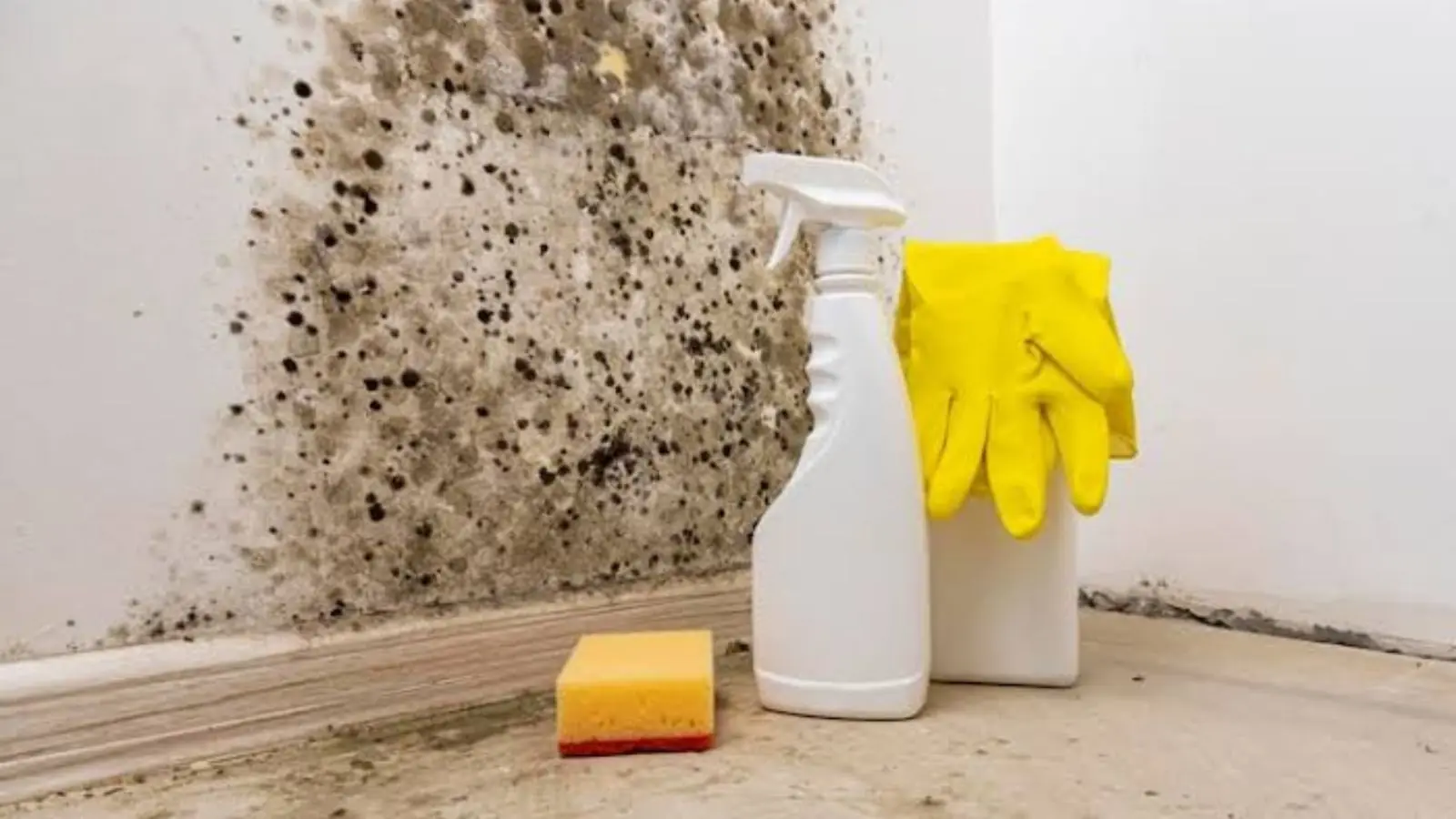
Why killing mold is the wrong goal
Say a bathroom exhaust fan has been weak for years and a patch of ceiling has turned speckled. You spray it, the color fades and the problem seems solved. A few months later it is back, because the moisture that fed it never changed.
The EPA puts it plainly: the key to mold control is moisture control. Cleaning mold without fixing the water problem means it will most likely return. Even when a product does kill the growth, dead mold remains on the surface and has to be physically removed.
So the order of work is: stop the water, remove the growth, dry the area completely and then decide whether the material can stay. Our water damage cleanup page covers the water side of that order.
Cleaners compared in general terms
Product choice matters less than most people think. None of the options below replaces scrubbing and drying, and no method can promise that growth will not return.
Detergent and water
The EPA's recommended starting point for hard surfaces. Scrub the area, rinse, then dry completely. It is inexpensive and low in fumes.
White vinegar
A household acid that some people use on non-porous surfaces. It has a strong smell, and it is no substitute for scrubbing and drying.
Hydrogen peroxide
A common household product that can lighten stains. Test a hidden spot first because it can bleach fabric and some finishes.
Commercial mold cleaners
Labeled products for hard surfaces. Follow the label for contact time, ventilation and which materials they can be used on.
Bleach
Often reached for first. It can discolor surfaces, and it does not soak into porous materials like drywall or wood, where roots may remain.
Never mix cleaners
Bleach combined with ammonia or with acids such as vinegar can release harmful gases. Use one product at a time, rinse between products, ventilate the room and read every label.
Surface by surface: what usually happens
The material decides the plan. Hard, non-porous surfaces can often be cleaned and kept, while porous ones that absorb water often have to go.
| Surface | Usual approach | Why |
|---|---|---|
| Tile and grout | Scrub with detergent and water, rinse, dry | Hard surface, mold sits on top |
| Glass, metal, sealed plastic | Clean with detergent and water, dry fully | Non-porous, easy to clean |
| Painted drywall, small area | Clean the surface only if it is small, solid and fully dry, otherwise cut out and replace | Paper and gypsum absorb water |
| Unfinished wood framing | Scrub or sand surface growth, fix moisture, dry thoroughly | Dense wood can often be cleaned if structurally sound |
| Carpet and pad | Usually discard | Porous and hard to clean deeply |
| Ceiling tiles and insulation | Discard | Absorbent, cannot be fully cleaned |
| Upholstered furniture and fabric | Discard or professional cleaning depending on item | Fibers hold growth |
The EPA notes that absorbent or porous materials such as ceiling tiles and carpet may have to be thrown away if they become moldy. Do not paint or caulk over moldy surfaces, since that seals the problem in.
Cleaning a small area safely
The EPA's rough threshold is about 10 square feet. Smaller areas can usually be handled by the household, while larger areas or significant water damage call for professional guidance.
Fix the moisture
Repair the leak, clear the condensate line or improve ventilation first. Nothing else lasts without this.
Protect yourself
Wear gloves, eye protection and a well-fitting mask, and keep the area ventilated with the door closed to the rest of the house.
Scrub and rinse
Use detergent and water on hard surfaces, then wipe with clean water. Bag contaminated rags and discard them.
Dry completely
Run fans and a dehumidifier. Moisture left behind restarts the problem.
If anyone in the household has health concerns, talk to a health professional about it. Cleaning advice is not medical advice.
When to stop scrubbing and call a professional
Some situations are beyond a bucket and a brush. The EPA recommends hiring a professional for sewage or other contaminated water and for suspected hidden mold.
- Growth covers more than roughly 10 square feet
- The water source was sewage or another contaminated source
- You smell mold but cannot see it, which can point to a wet wall cavity
- Mold returns after you cleaned it and fixed the apparent leak
- The area is inside HVAC ducts
A professional job usually includes containment, HEPA air scrubbers and negative air to keep spores from spreading, plus removal of affected materials and drying. S520 is the published ANSI/IICRC standard for mold remediation, and you can ask any company whether its crews work to it. We also serve nearby South Jordan and Riverton homeowners with the same process.
Not sure what you are looking at?
Call (385) 988-9410 and describe it. Same-day response when available.
Safety checklist before cleaning
Before anyone arrives, a few safe steps protect people and limit damage.
- Fix the moisture source first, since cleaning without that lets growth return.
- Wear gloves, eye protection and a well-fitting mask rated for the job.
- Never mix bleach with ammonia or other cleaners.
- Open windows and keep other rooms separate from the work area.
- Stop and call a professional if growth covers a large area or follows sewage.
Draper: sewer backups and the 24 to 48 hour window
Draper sewer service falls under Jordan Basin Improvement District (formerly South Valley Sewer District), which serves Draper, Herriman, Riverton, South Jordan and others. If a drain backs up into a basement, the water is sewage, not something to clean with a household spray. Call the district to ask about the main line, and then call a professional for cleanup.
The EPA says to dry water-damaged areas and items within 24 to 48 hours to prevent mold growth. After a weekend plumbing failure, that window can close before a repair person arrives, so get extraction and drying started while the plumber works.
Permits matter if walls or plumbing are rebuilt. Draper's online portal lists Remodel/Alteration and Plumbing permit types but does not state when one is required, so ask the city before a contractor starts.
Sources: Jordan Basin Improvement District history, EPA: Brief guide to mold, moisture and your home, EPA: Mold cleanup in your home, Draper City permits and applications
Common questions
Does bleach kill mold on drywall?
Bleach tends to stay on the surface and does not soak into porous drywall, so it can lighten a stain while growth remains inside. Painted drywall with a small, dry patch may be cleaned, but wet or crumbling drywall is usually cut out. Never mix bleach with other cleaners.
Is vinegar better than detergent?
The EPA suggests detergent and water for hard surfaces, followed by thorough drying. Vinegar is a household option for some non-porous surfaces, but neither replaces scrubbing and fixing the moisture source.
Can I paint over mold with mold-resistant paint?
The EPA says not to paint or caulk over moldy surfaces. The mold still has to be cleaned or removed first, and the moisture problem fixed. Paint on top can peel and hide the problem.
What should I do if a sewer drain backs up in Draper?
Treat the water as contaminated. Keep people and pets out, call Jordan Basin Improvement District to ask about the main line, and call a restoration company for extraction and removal of affected materials. Check your policy, since sewer backup coverage varies.