
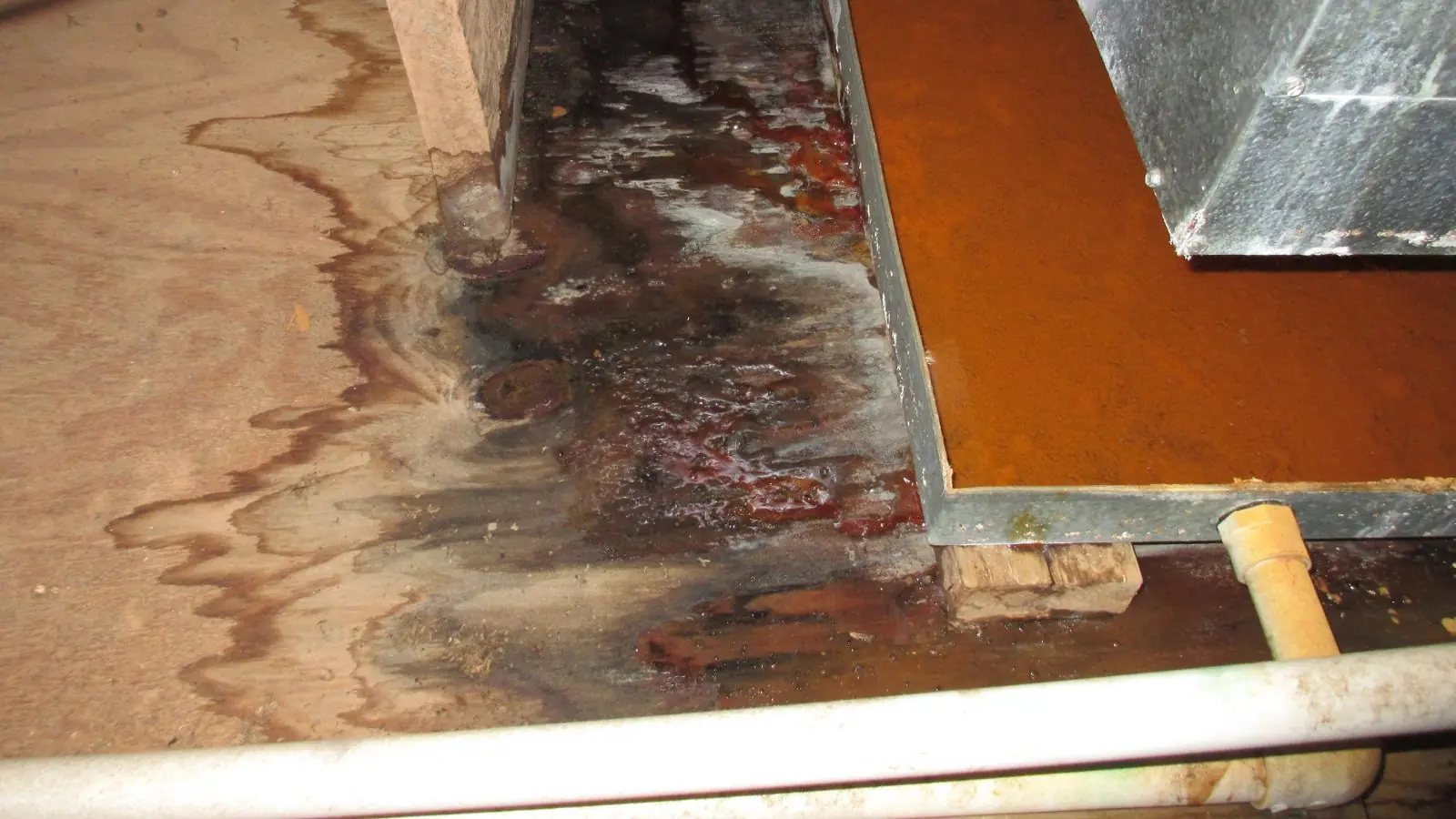
The first hour matters more than the fix
A dishwasher supply line seeps overnight, and by morning the kitchen floor feels soft near the sink. What you do in the next hour sets up everything else. Quick action often decides whether a floor needs drying or replacing.
- Shut off the water source and, if the area is near outlets or appliances, turn off power to that circuit.
- Mop or vacuum up standing water. A wet-dry vacuum works well on plank floors.
- Pull rugs, mats and furniture legs off the wood, and lift anything that was sitting on it.
- Run fans and, if you have one, a dehumidifier. Keep windows closed so the dehumidifier is not fighting outside air.
- Photograph the floor from several angles before anything moves, and note the time you found the water.
If the water covered a large area or came from a source you cannot stop, our emergency water removal crew can get extraction equipment in. EPA advises drying water-damaged areas within 24 to 48 hours to prevent mold growth, so speed counts.
Reading the warning signs: cupping, crowning and buckling
Boards react to moisture in recognizable ways. Knowing which one you have tells you how far along the damage is.
Cupping
The edges of each board rise above the center, so the surface looks like a row of shallow troughs. It usually means the underside absorbed more moisture than the top, and it often eases once the floor dries slowly and evenly.
Crowning
The center of each board rises above the edges. It can appear after a cupped floor was sanded before it was fully dry, or when moisture comes from above and the surface swells.
Buckling
Boards lift away from the subfloor, sometimes in a tent shape. This is the most serious sign, because the flooring has pulled off its fastening and is rarely worth saving once it has.
Decision table: dry in place or take it out
The right answer depends heavily on flooring type. Use this table as a starting point, then confirm with moisture readings in the boards and the subfloor.
| Flooring type | Usually dried in place when | Usually removed when |
|---|---|---|
| Solid hardwood | Water was clean, caught fast, and boards are only slightly cupped | Boards have buckled, black staining appears or water sat for days |
| Engineered wood | Only a thin spill reached the surface and the seams stayed tight | Layers have separated, edges swell or the core feels soft |
| Laminate | Rarely. Fiberboard cores absorb water and rarely recover | Nearly always once seams swell or planks lift |
| Subfloor under any of these | Readings come back to normal and there is no soft spot | Panels are swollen, delaminated or smell musty |
Solid hardwood is the most forgiving, which is why it is often dried in place when the water was clean. Laminate is the least forgiving, because the compressed fiber core swells permanently.
Water that came from a sewer backup or a dirty source changes the table completely. Contaminated water usually means porous materials come out, regardless of flooring type.
What drying in place actually involves
Drying a floor in place is not just pointing a fan at it. Crews often use panels or mats that pull air through the boards, along with dehumidifiers that keep room humidity low enough for the wood to release moisture.
The key is slow, steady drying. Rushing it with heat can cause boards to split or cup harder, so a careful crew tracks readings daily and adjusts. If you want to see how that process works across a whole house, our water mitigation page lays out the equipment and logging.
Expect the floor to move even after it feels dry. Boards can keep shifting for days or weeks as moisture balances out, which is why sanding or refinishing should wait until a meter says the wood and subfloor are ready.
When boards or the subfloor have to come out
Sometimes the surface is not the main problem. Say a water heater leaks onto a ground-floor room and the water runs under the baseboards into the subfloor. The boards may look recoverable, but a plywood subfloor that stays wet will swell, loosen the nails and hold moisture against the underside of the wood.
Signs that point to removal include:
- Boards that feel spongy or compress when you press them
- A musty odor that persists after the room has been dried
- Dark staining that runs along seams or nail lines
- Subfloor panels that look swollen at the edges or have delaminated layers
- Fastener heads that have started to rust
Pulling a few rows is often enough to expose the subfloor and let it dry. A repair crew can then reinstall or replace boards, and a fresh finish can be blended into the rest of the room.
Describe your floor to a real person
Call (385) 988-9410 with the flooring type and how long the water sat. Same-day response when available.
What to do before anyone arrives
Do
Document damage, move furniture, run a dehumidifier and keep foot traffic off buckled boards.
Do not
Do not sand, seal or cover a wet floor. Trapped moisture can ruin boards that might have recovered.
Do
Check your policy. Sudden and accidental water damage is often covered, while gradual leaks usually are not, so ask your insurer.
Do not
Do not use heat guns or space heaters aimed at the boards. Uneven heat can split planks.
Standard to ask about
The published ANSI/IICRC S500 standard for water damage restoration is the reference many professionals work from, and you can ask any company whether its crews follow it. For wood floors, the useful question is whether the crew will take moisture readings each day and show you the numbers before deciding to pull boards.
Wood floors in Draper homes: seasonal habits worth knowing
Pressurized irrigation in Draper is not a city service. WaterPro and Draper Irrigation Co. typically turn it on around April 15 and off around October 15. If you have a ground-level wood floor near an exterior wall, check for damp baseboards in the first week after startup, because a broken sprinkler line or leaking valve can wet a slab or crawl space without any visible puddle.
Salt Lake City records about 52 inches of snow in a typical year, and April is the wettest month (those are the airport station numbers, not Draper's). Spring melt near the foundation is a common time for moisture to find its way under flooring, so inspect basement and ground-level wood after thaw.
If boards and subfloor are being replaced or plumbing is being moved, Draper handles building permits through an online portal, and its page does not state when one is required. Ask the city before the work begins. Neighbors in Riverton and Herriman deal with the same questions.
Sources: Draper City water and storm water, Draper City permits and applications, EPA: Brief guide to mold, moisture and your home
Common questions
Will cupped floorboards flatten on their own?
Often they ease as the floor dries slowly and the moisture balances out, though it can take weeks. Do not sand until a meter shows the wood is dry. If the boards stay cupped after they test dry, a refinish or board replacement may be needed.
Is engineered wood easier to save than solid hardwood?
Not usually. Engineered planks have layers glued together, and water can separate them or swell the edges. Thin spills that are cleaned up fast can be fine, but soaked engineered flooring is commonly replaced.
Can I leave laminate in place if it dried out?
Laminate with a fiber core that swelled rarely returns to its original shape. Planks may look fine at first, then show raised seams later. If seams have lifted, replacement is the usual outcome.
Does the April irrigation startup in Draper affect my floors?
It can, indirectly. When secondary water comes on, a damaged line near a foundation can leak unnoticed into a slab or crawl space. Check baseboards and ground-level floors for dampness in the first week after startup.