
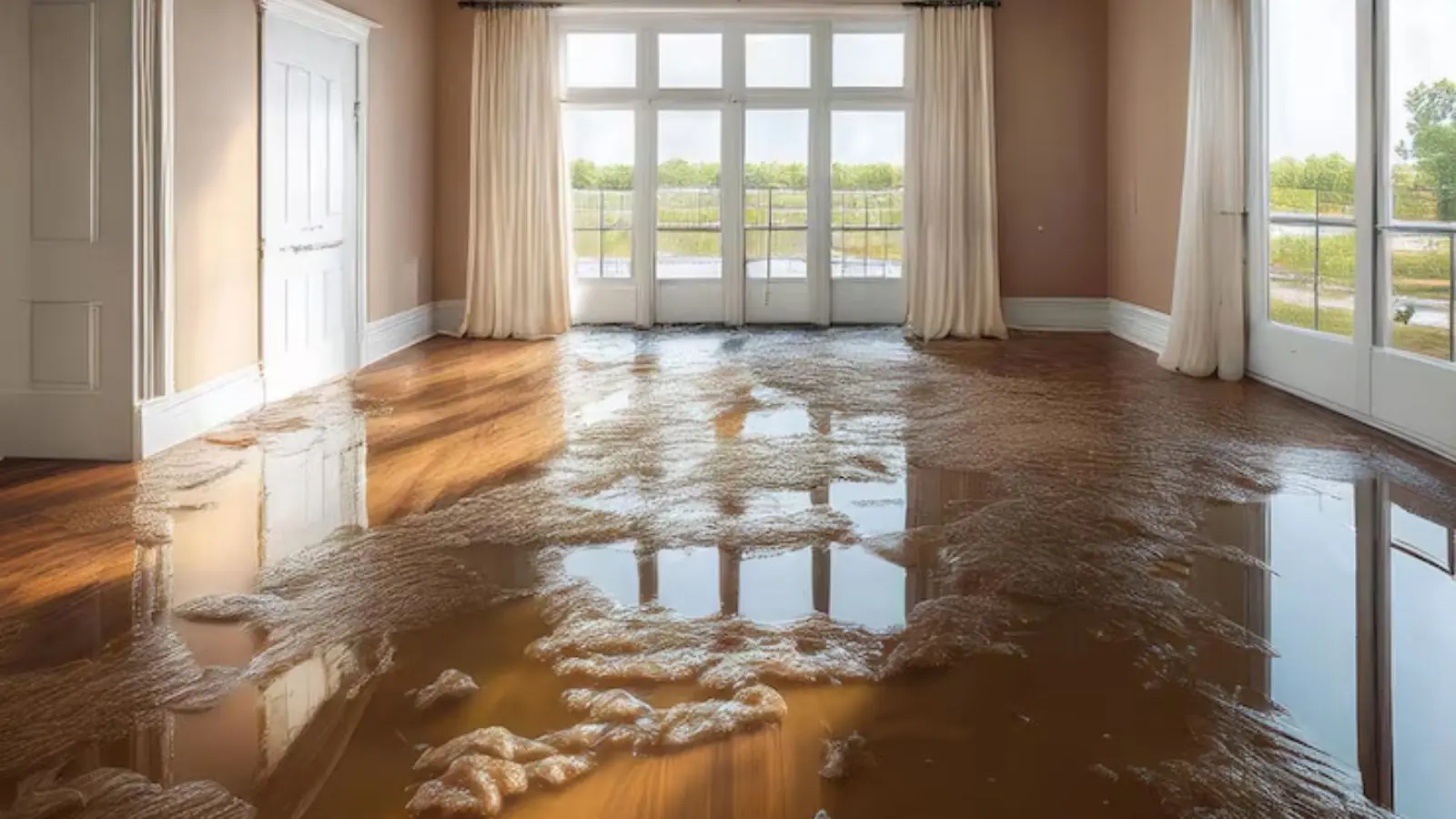
Dry first, sand last
The most common mistake with a wet hardwood floor is hurrying to the sander. A homeowner sees cupped boards after a refrigerator ice-maker line leaks, rents a drum sander the following weekend and sands the high edges flat.
Weeks later, the boards finish drying from underneath, the edges drop and the center rises. That is crowning, and it is the direct result of sanding wood that still held moisture. Flattening a floor that is still releasing water locks in a shape the wood will not keep.
Solid hardwood absorbs water through its underside and edges as well as the top, so the surface can feel dry while the core is not. The only reliable test is a moisture meter on the boards and the subfloor, compared with a reading from an unaffected part of the house.
How long before you can sand
No honest number fits every floor. Species, board thickness, how long the water sat and the humidity in the house all change the timeline. Expect days of active drying and then additional time for the wood to settle, often weeks, not hours.
Readings match the baseline
Boards and subfloor read close to a reference spot that never got wet, taken with the same meter.
Cupping has stopped changing
Lay a straightedge across a few boards. If the gap is shrinking or steady over several days, the wood has settled.
The subfloor is dry too
A wet subfloor will re-wet the boards from underneath after sanding. Readings should be taken from below if there is access.
A drying crew documents these checks in a log, which is useful if you later file an insurance claim or talk to a flooring contractor. Our water mitigation service includes that documentation.
Black marks and gray stains
Dark staining usually points to water that stayed on or in the wood for a long time, not one quick spill. Moisture reacts with tannins in the wood and with metal fasteners, and the stain can be black at the seams or around nails.
Surface graying may sand out. Deep black staining that runs through the board often does not, and bleaching it can leave a pale patch that is just as visible as the stain. If sanding has already taken the board to a thin layer, replacing it is cleaner than chasing the mark.
A musty smell from the stained area is worth taking seriously, because hardwood that stayed wet may have hidden mold on its underside. If you suspect it, our mold remediation page explains how testing and removal work.
Refinish or replace: how it plays out in practice
Refinishing is enough when the damage is mostly cosmetic, the boards are flat, the subfloor is sound and the stain is shallow. Replacement becomes the practical choice when it would take too much sanding to correct, or when the damage covers a large share of the room.
- Refinishing usually works for light surface whitening, finish clouding and minor, settled cupping
- Spot replacement fits a few damaged boards near a leak with healthy wood around them
- Partial replacement fits a room where one third or more of the boards are lifted, stained or loose
- Full replacement fits floors where the subfloor is also damaged, or where sanding has left the wear layer too thin
In practice, the cost question flips when labor to repair many individual boards exceeds the labor to lay a new section. Ask for both options in writing, with scope explained before work starts.
Stain, finish and blending new boards
New boards rarely match the old floor on day one. Old oak has aged and darkened under finish, while new oak is pale. A good flooring contractor weaves new boards into the existing pattern and sands the whole room so the stain and sheen can be applied evenly.
Practical tips for blending:
- Keep a few leftover boards from the original install if you have them
- Sand the full room or at least to a natural break such as a doorway
- Test stain on a scrap of the same species before it goes on the floor
- Plan to finish edge to edge, not in patches, so lap marks do not show
Floor looks worse than you expected?
Call (385) 988-9410 and describe the staining and the boards. Same-day response when available.
Dry Utah air: drying help and a gaps problem
Utah's dry winter air can help a drying floor, since low indoor humidity pulls moisture from wood. It can also work against you, because boards that dry too fast can split, and the floor can open gaps between boards that were tight before.
Gaps that appear in winter often close up again as humidity rises. A floor that stays gapped after it tests dry, or that cups every time the weather changes, may have been left with moisture trapped under the finish. A humidifier set to a steady indoor level and a stable thermostat help hardwood hold its shape.
Nearby towns see the same winter pattern, and our teams in Sandy and Alpine get similar questions.
Draper basements and hardwood: the 2023 Bellevue lesson
In January 2023, more than thirty homes in Draper's Bellevue neighborhood took on groundwater flooding, with several getting inches of water inside. A city spokesperson said the storm drain system was inspected and operating without issue, so this was a problem in a private system. If groundwater reaches a hardwood floor over a basement or slab, the water came from the ground and may carry silt, so ask the crew how they classify it.
Standard homeowners and renters policies do not cover flood losses, and the Utah Insurance Department says NFIP basement coverage excludes finished flooring and drywall. Read your policy before you assume a floor will be paid for, and ask your insurer how groundwater is handled.
The city later dropped off dumpsters for cleanup, which is a reminder to separate ruined material from salvageable boards. Photograph and set aside the wood you might reuse before the debris goes out.
Sources: Utah Public Radio: over 30 Draper homes damaged after groundwater flooding, Utah Insurance Department flood FAQ
Common questions
Should I sand cupped hardwood as soon as it feels dry?
No. Feeling dry and being dry are different. Wait until a moisture meter shows the boards and the subfloor are close to a reference reading and the cupping has stopped changing. Sanding early can lock in a crowned floor.
Can black water stains be removed from hardwood?
Light staining may sand out. Deep black stains that run through the wood often do not, and bleaching can leave a pale patch. If the stained boards are few, replacing and blending them is usually cleaner.
Does a refinish hide water damage?
A new finish can cover cosmetic marks but not trapped moisture or swollen boards. Refinishing over a wet floor can make things worse by sealing in moisture. Check readings first.
Does Draper's groundwater history change how I should treat a wet basement floor?
Yes. Groundwater is not clean supply water, so it may need to be handled as contaminated and some materials may come out. The January 2023 Bellevue event is an example where water entered homes through a private system, and flood losses are usually excluded from standard homeowners policies.