
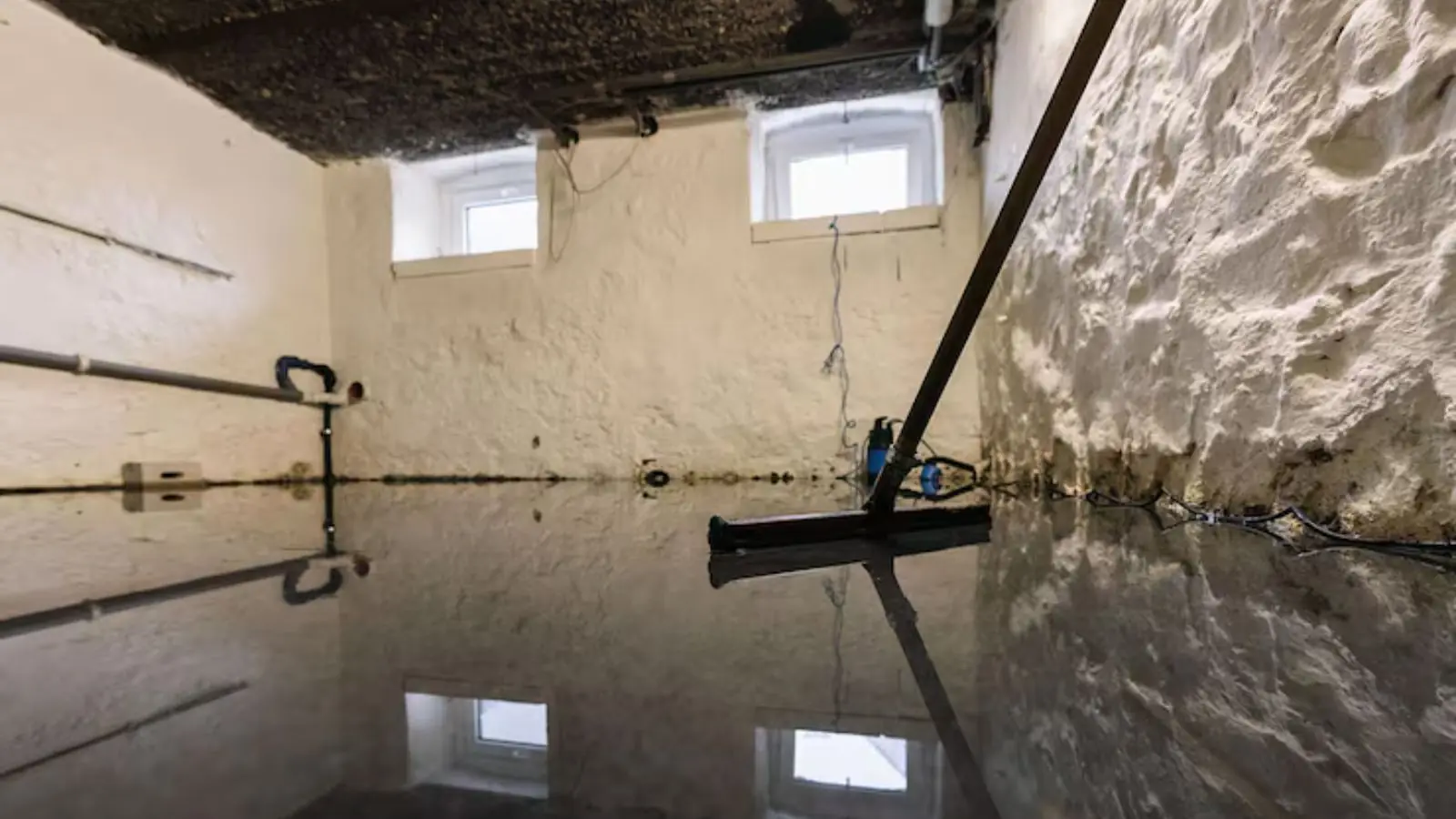
First, check for danger before you check for damage
Water and electricity do not mix, and a basement is where the panel, outlets and appliances sit closest to the floor. If water is deeper than the bottom of an outlet, or you see sparks, hear buzzing, or smell burning, stay out. Do not stand in water to reach a breaker panel.
If the panel is dry and you can reach it without stepping in water, switch off the breakers for the basement. If you cannot reach it safely, call your utility or an electrician and tell them water is present. Unplugging things from a wet floor is not safe either, so leave cords where they are.
Stop and call if any of these are true
The water is deeper than outlet height, it smells like sewage, the panel or outlets are wet, you smell gas, or water is still entering. Do not enter, and do not use a shop vac on standing water near electrical hazards.
Also watch for slick stairs and a heavy, saturated carpet, which can hide nails from tack strips. Wear boots and gloves, and keep children and pets upstairs.
Identify what kind of water you have
The published ANSI/IICRC S500 standard sorts water into three categories, and the category decides what is safe to handle yourself. Here is a plain version of how it plays out in a basement.
| Water type | Typical basement source | What you can do | Call a pro? |
|---|---|---|---|
| Category 1 (clean) | Broken supply line, water heater leak, a bad hose | Shut off water, move contents, start fans | Yes if carpet and drywall are wet |
| Category 2 (gray) | Washing machine overflow, sump pump failure, dishwasher discharge | Move contents, wear gloves and boots, avoid skin contact | Yes, contents and materials decisions are riskier |
| Category 3 (black) | Sewer backup, ground-level flooding, window well overflow with soil | Leave the area, keep people and pets out | Yes, right away |
If you are not sure which category applies, assume the worse one. A window well that overflowed in a storm brings in surface water and soil, which usually puts it in the higher category. A broken supply line starts clean but changes as it sits.
The first hour: stop the source, then protect what you can
Stop the source
Shut off the main water valve if a pipe or appliance is the cause. For a window well or groundwater, you cannot stop the supply, so focus on keeping people safe.
Cut power if it is safe
Flip basement breakers only if the panel is dry and reachable. If it is not, call the utility or an electrician.
Move contents up
Lift boxes, rugs and small furniture to dry ground or onto plastic risers. Take photos before you move them.
Take out electronics
Remove only what is out of the water and unplugged without standing in it.
Open air paths
Open basement doors upstairs and set a household fan if the power is on and safe, but do not run anything near standing water.
A finished basement with carpet over a pad is a good example. Lifting the corners of the carpet off the tack strip and propping the pad up lets air under it, but only when the water is clean and it is safe to be in the room.
What a shop vac can and cannot do
A wet/dry shop vac is useful for an inch or two of clean water on a hard floor. It is not rated for deep standing water or for use while you stand in water, and it should never go near wet outlets or contaminated water.
- Use only plugged into a GFCI-protected outlet on a dry circuit
- Empty the tank often and dump it outdoors or into a utility sink, not a floor drain connected to a sewer backup
- Do not use it on gray or black water
- Do not run it if the cord or plug is wet
- Stop if the motor smells hot or the breaker trips
Pumps and truck-mounted extraction units pull water far faster than a household vac, and they can reach water under carpet. If more than a small area is wet, you will save time by calling. The longer the pad stays soaked, the less likely it is to be saved.
Document before you discard
Take photos and video before you move or throw anything out. Insurers usually ask for proof, and a good record also helps your restoration crew understand the loss.
- Photograph the high-water line on the walls with a tape measure in frame
- Shoot wide and close-up shots of every wet room, including the ceiling below
- Photograph damaged belongings and serial numbers of appliances and electronics
- Save the source: the burst hose, the failed sump, the overflowing well
- Note the date, time, and when you shut things off
- Keep a list of items thrown away, with approximate age and value
Hold on to samples of flooring or drywall if your insurer asks for them. And a key point on coverage: sudden and accidental damage is often covered, gradual leaks often are not, and flood is usually excluded without a separate policy. Check your policy and ask your insurer before you decide anything final.
Hours 12 to 48: the clock that matters
The EPA puts the drying target at 24 to 48 hours to prevent mold growth. After that, drywall paper, baseboards and carpet pad become a place where mold can start. This is the window where professional drying equipment makes the biggest difference.
A crew will extract water, remove wet pad, and set air movers and LGR dehumidifiers, then track moisture with meters and thermal imaging cameras. For a closer look at that process, see our flood damage restoration page, and our water damage cleanup page for the cleanup side.
Water in the basement now?
Call (385) 988-9410. Tell us the depth, the source if you know it, and whether the power is off.
If you live in South Jordan or Herriman, the same first-48-hours plan applies. Tell the dispatcher what the water is, how deep it is, and whether the power is off.
Draper groundwater and the Bellevue flooding
In January 2023, more than thirty homes in Draper's Bellevue neighborhood were hit by groundwater flooding in a private system, with several getting inches of water inside. A city spokesperson said the city storm drain system was inspected and operating without issue. If groundwater is the source, shutting off a valve will not stop it, so move people and valuables first and call a crew to pump and dry.
The city offered sandbags and later dropped off dumpsters for cleanup. The practical lesson is to expect a pile of wet debris and plan where it can go. Draper also lists an after-hours emergency line for storm water issues on its water and storm water page, which is worth saving in your phone before it rains.
The Utah Insurance Department notes standard homeowners policies do not cover flood, and the standard NFIP waiting period is 30 days. If groundwater is common in your area, ask your insurer about flood coverage before the next storm, not after.
Sources: Utah Public Radio: Draper groundwater flooding, Jan 2023, Draper City water and storm water, Utah Insurance Department flood FAQ
Common questions
Is it safe to go into a flooded basement?
Not if water is above outlet height, the panel is wet, or the water may be sewage. Turn off power only if you can reach the panel without stepping in water, and otherwise call the utility or an electrician.
Can I use a shop vac to clean up basement water?
For a small amount of clean water on a hard floor, yes, with a GFCI outlet and dry footing. Not for deep water, gray or black water, or near wet outlets.
How long do I have before mold starts?
The EPA advises drying water-damaged areas and items within 24 to 48 hours. After that the risk rises, especially in carpet pad and drywall.
What if my Draper basement flooded from groundwater, like the Bellevue homes in 2023?
Groundwater is typically treated as contaminated and cannot be shut off at a valve. Move people and valuables up, document the water line, call a restoration crew, and check your policy about flood coverage.
What should I photograph before cleanup?
Capture the high-water line with a tape measure, each wet room, damaged items and appliance serial numbers, plus the source of the water. Date everything.